
Power outages, off-grid projects, and the so-called “end times” call for different kinds of power generators. Each technology brings distinct trade-offs in power quality, noise, emissions, maintenance, and installation. The examples herein highlight what each class of generator does best, whether it’s a good fit for you, and even some great ways to save.
Gas generators are the generalists of the group, valued for straightforward power at relatively low upfront cost. A typical product line, such as Tomahawk Power’s portable gas generators, is positioned for construction sites, camping and recreation, and emergency home backup, emphasizing rugged performance and portability. In practical terms, that means enough surge capacity to start tools and appliances, large fuel tanks for longer runtime, and frames or wheels for transport across a jobsite or driveway. The trade-off is sound and exhaust: conventional gas models are louder than inverters and require safe fueling and ventilation practices. Their appeal is breadth—one machine can power drills, lights, and saws on a weekday and keep a fridge, lights, and chargers running during a weekend outage. (Tomahawk Power). A host of gas generators can be found at great discounts at Generator Factory Outlet, where deals are hundreds of dollars off original price.
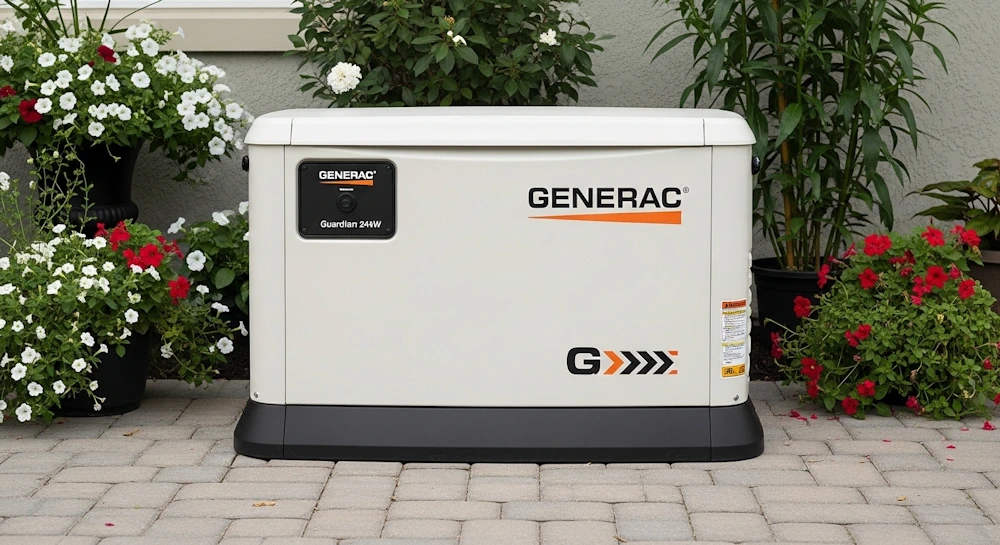
Standby generators move in the opposite direction, prioritizing convenience and whole-home resilience. A home standby unit from a specialist like Generac is permanently installed outside the house like a central A/C, hard-wired through a transfer switch to start automatically within seconds of an outage and continue until utility service returns. Because these systems run on natural gas or liquid propane, there is no refueling during a crisis; weekly self-tests, Wi-Fi-enabled models, and dealer networks further underline the “always ready” promise. Buyers typically size by kilowatts to cover essentials or the full electrical panel, and a licensed installer handles permits, gas plumbing, and electrical work. The premium is cost and installation complexity, but the payoff is hands-off, automatic protection for everything from medical devices to HVAC. (Generac). Right now Generac has some great promotions to get a free 5 year warranty, a $535 value.
Digital inverter generators serve a different niche: clean, quiet electricity that is safe for sensitive electronics. A representative range, such as DuroMax’s Digital Inverter Generators, outputs a pure sine wave designed for computers, TVs, and modern appliances, and is markedly quieter than conventional open-frame units. Inverter technology modulates engine speed to match load, reducing fuel consumption at lighter draws and making these machines well-suited to RVs, tailgates, neighborhood-friendly backup, and mobile small-business setups. Many current models also offer parallel capability for temporary capacity boosts, along with dual-fuel options in higher-output variants. The limitation is peak power per dollar: inverters generally cost more than equivalently rated conventional units, but they repay the premium with low total harmonic distortion and a calmer sound profile. (DuroMax Power Equipment). Electric Generators Direct has a host of great deals on inverter generators with which one can save, not to mention factory direct pricing.
Portable solar generators, better described as power-station-and-panel kits, replace gasoline with stored solar energy. Brands like Goal Zero pair a Yeti power station—housing a high-capacity battery, AC inverter, and solar charge controller—with folding or briefcase panels to build a silent, emissions-free system that can operate indoors. The result is flexible backup and field power without fumes or noise, sized from compact weekend kits to large Yeti PRO systems capable of running bigger appliances and providing meaningful outage coverage. Recharge speed depends on panel wattage and sun exposure; larger arrays and higher-capacity stations shorten solar charge times. These kits shine where silence and indoor use are priorities, or where refueling is impractical, though sustained heavy loads may still favor an engine-driven generator or a whole-home standby. (Goal Zero). Right now Jackery has some compelling savings on Solar Generators, from $1,300 to $1,600 off, which is in many cases up to 50% off the original price.
Diesel generators round out the lineup for buyers who prize durability, long runtimes, and steady-load efficiency over low upfront cost. A good example is Generac’s XD5000E portable diesel, built around an industrial Yanmar engine with a 12-gallon tank for a listed 32.4 hours at 50% load and sub-6% total harmonic distortion for cleaner power to tools and appliances. The steel cradle and integrated lifting eye signal its jobsite roots, and diesel’s lower volatility than gasoline is a safety plus during storage and refueling. (Generac). Diesel generators tend to be quite pricey, and often skew towards commercial applications; even factory direct pricing might encourage you to buy another kind.